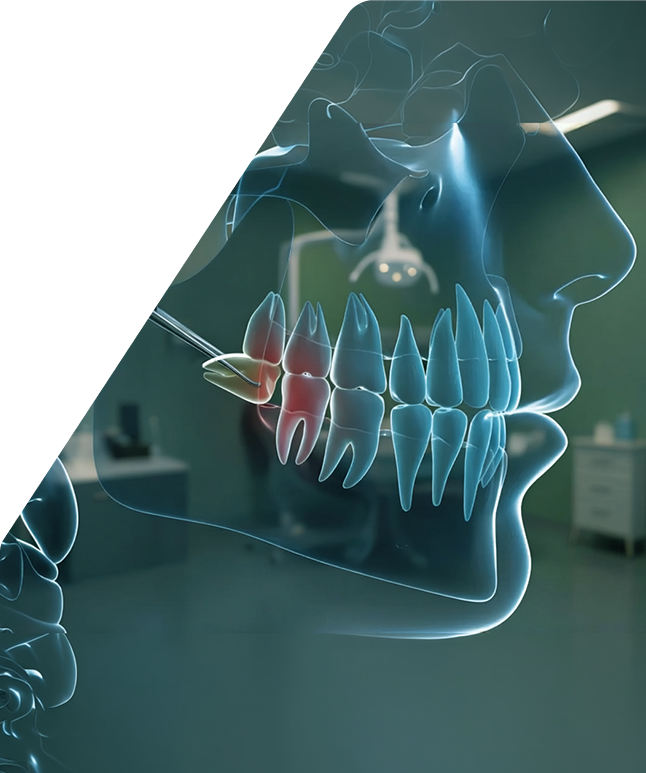
When there isn’t enough space in the mouth, wisdom teeth may grow at an angle, partially erupt, or remain trapped beneath the gums. This can create discomfort and increase the risk of infection or damage to neighbouring teeth. Wisdom tooth removal helps patients:
Relieve Pain and Pressure
Impacted or overcrowded wisdom teeth can cause persistent discomfort, jaw stiffness, and headaches.
Prevent Infection and Gum Inflammation
Partially erupted wisdom teeth can trap food and bacteria, increasing the risk of decay and gum disease.
Protect Adjacent Teeth
Impacted wisdom teeth may push against neighbouring molars, causing damage, shifting, or bite changes.
Reduce Risk of Cysts or Complications
In some cases, untreated wisdom teeth can lead to cysts or other complications affecting bone and surrounding tissues.
Maintain Long-Term Oral Health
Early evaluation and timely removal help prevent more serious issues and preserve overall dental stability.
For patients experiencing discomfort, swelling, or changes in bite, a professional assessment ensures that wisdom teeth are managed safely and effectively.
Your dentist will examine your mouth and take X-rays to determine the position of the wisdom teeth and whether removal is recommended.
Based on the complexity of the case, a personalised treatment plan is created to ensure comfort and safety.
Local anaesthesia is used to numb the area. Additional options may be discussed if necessary for patient comfort.
The dentist carefully removes the wisdom tooth. In some cases, a small incision may be required for impacted teeth.
Once the procedure is complete, you will receive detailed instructions to support proper healing and recovery.
Adhering to your dentist’s guidance supports smooth healing and reduces complications.
Use cold compresses and prescribed medication as directed to minimise swelling and pain.
Stick to soft, cool foods while the area heals, avoiding hard or spicy foods that may irritate the site.
Keep your mouth clean while avoiding disturbance to the extraction site.
Your dentist may schedule a review to ensure proper healing and address any concerns.
Not always. Removal is recommended if they are impacted, causing discomfort, or posing a risk to oral health.
The procedure is performed under anaesthesia for comfort. Some mild swelling or soreness after treatment is normal and temporary.
Most patients recover within a few days to a week, depending on the complexity of the removal.
Soft foods such as yoghurt, soups, mashed vegetables, and smoothies are recommended initially.
Delaying necessary removal may increase the risk of infection, tooth damage, or bite misalignment.