Preserve Natural Teeth
Keep your tooth and avoid extraction.
Eliminate Infection
Remove bacteria that can lead to abscesses or bone loss.
Relieve Pain
Treat toothaches caused by infection or inflammation.
Restore Function
Bite and chew comfortably once the tooth is restored.
Protect Overall Health
Prevent infection from spreading to other areas.
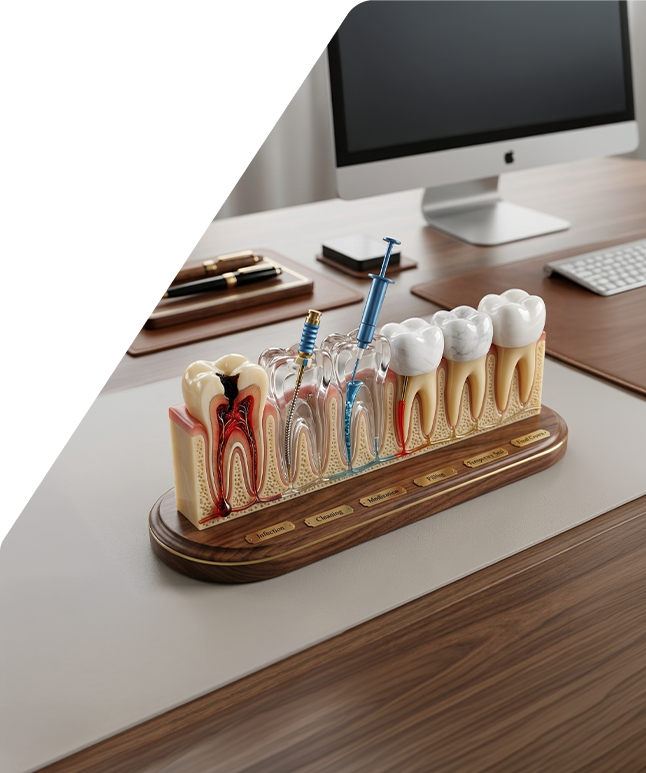
Exam and X-rays to assess infection.
Local anaesthetic and opening to reach the pulp.
Remove infected tissue and disinfect canals.
Seal canals with biocompatible material.
Protect the tooth with a crown or filling for long-term use.
To support healing and protect your tooth after root canal therapy, it’s important to follow these daily care practices:
Refrain from chewing on the treated side until the final restoration (crown or filling) is placed to protect the tooth and allow proper healing.
Brush and floss gently around the treated tooth to prevent reinfection and support overall oral health.
Attend scheduled dental visits so your dentist can monitor the tooth, ensuring the treatment remains successful and complications are avoided.
Contact your dentist promptly if you notice unusual pain, swelling, or pressure, as these may indicate a complication requiring attention.
Modern root canal procedures are performed under local anaesthesia, making them virtually painless. You may experience mild tenderness afterwards, which usually subsides within a few days.
Most treatments can be completed in one or two visits, depending on the complexity of the tooth and the extent of infection.
With proper care and restoration (usually a crown), a tooth that has undergone root canal therapy can last a lifetime.
In most cases, yes. A crown strengthens the treated tooth, preventing fractures and ensuring long-term functionality.
No. Once the pulp is infected, it cannot heal on its own. Without treatment, the infection can spread and lead to abscesses or tooth loss.