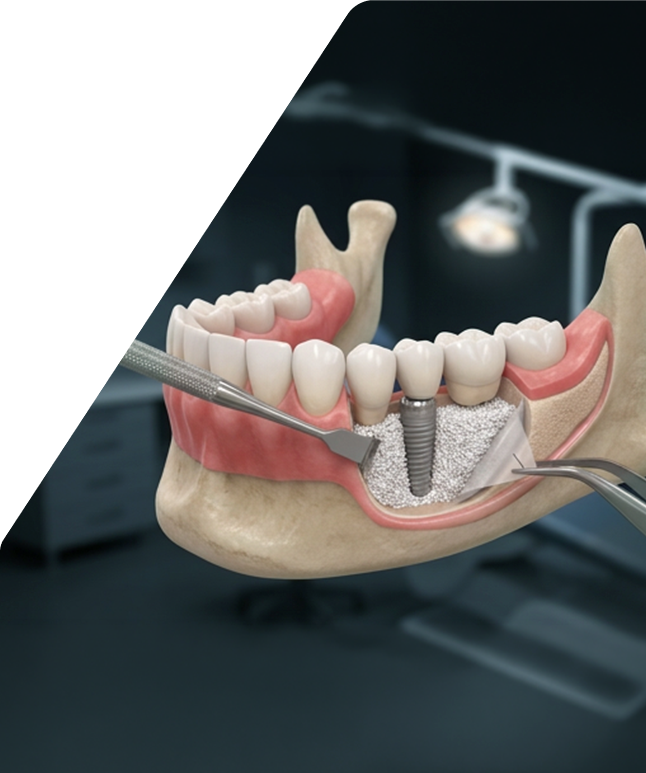
Bone naturally shrinks when teeth are lost or when infection or trauma affects the jaw. Without sufficient bone, neighbouring teeth and restorative treatments may be compromised. Bone grafting helps patients:
Restore Lost Bone Volume
Rebuilds areas of the jaw where bone loss has occurred.
Prepare for Dental Implants
May be recommended when additional bone support is required before implant treatment.
Prevent Further Bone Loss
Reinforces weakened areas to maintain jaw shape and facial structure.
Support Future Treatment:
Bone grafting may assist in preparing the jaw for restorative dental procedures.
Treatment Planning
Bone grafting may be recommended as part of a broader restorative treatment plan.
For patients with tooth loss, trauma, or advanced gum disease, bone grafting is often essential to restore stability and protect oral health.
Your dentist assesses your oral health and takes diagnostic imaging to determine the extent of bone loss.
A customised plan is created for your specific needs.
The site is carefully prepared for optimal placement of the graft material.
Biocompatible material is used to stimulate natural bone growth.
The area is safeguarded while the bone regenerates, a process that can take several months.
Regular appointments allow your dentist to monitor healing and discuss any future treatment requirements.
Carefully follow your dentist’s post-procedure guidance.
Keep the area clean without disturbing the graft.
Avoid hard or crunchy foods as directed.
Use prescribed medication and cold compresses if recommended.
Monitoring ensures the graft is healing correctly and helps plan the next steps.
The procedure is performed under anaesthesia to ensure comfort. Mild swelling or discomfort afterward is normal and temporary.
Healing times vary depending on the extent of the graft, but bone regeneration typically occurs over several months.
Dental implants require sufficient bone support to remain stable. A graft strengthens the area to improve implant success.
Yes. Graft materials used are biocompatible and designed to support natural bone regeneration.
In many cases, bone grafting is performed to prepare for implants or other restorative treatments, which will be discussed during planning.