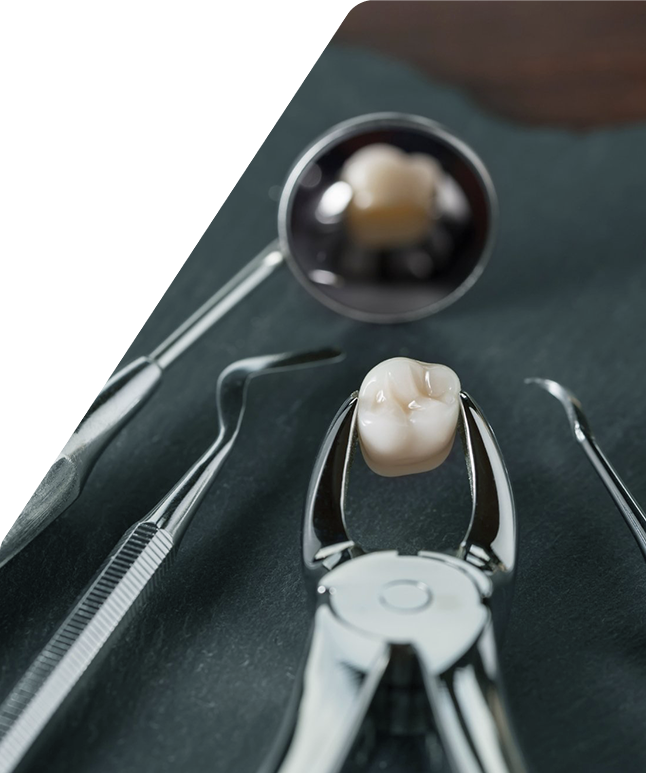
While saving natural teeth is always the goal, some teeth are beyond restoration. Surgical extraction helps patients:
Remove Severely Damaged Teeth
Teeth that are broken, cracked below the gum line, or extensively decayed may require safe removal.
Prevent Infection
Extraction may be recommended when infection is affecting a tooth or surrounding tissues.
Relieve Persistent Pain
Removing the source of discomfort restores comfort and daily function.
Protect Surrounding Teeth and Bone
Problematic teeth can compromise neighbouring teeth or jawbone health if left untreated.
Prepare for Future Treatments
Extractions may be necessary before orthodontics, dentures, or dental implants.
Timely surgical extraction helps prevent more complex complications and maintains long-term oral health.
Your dentist examines the tooth and may take X-rays to assess its position, roots, and surrounding bone.
A treatment plan is developed based on your clinical needs and the complexity of the procedure.
Local anaesthesia numbs the area, with additional options available if needed.
A small incision may be made in the gum, and the tooth may be sectioned into pieces for safe extraction.
Dissolvable sutures may be placed to support proper healing.
Instructions will be provided to support recovery following treatment. .
Adhering to your dentist’s guidance supports healing and reduces complications.
Use prescribed medication and cold compresses as directed.
Allow the area to heal properly in the first 24–48 hours.
Keep your mouth clean while avoiding the extraction site.
Monitoring ensures proper healing and early intervention if needed.
The procedure is performed under anaesthesia to ensure comfort. Some mild discomfort after treatment is normal and manageable.
Initial healing usually occurs within a few days, while complete healing may take several weeks, depending on the case.
Some surgical extractions require dissolvable stitches, which typically disappear on their own.
Most patients resume light activities the following day, but strenuous activity should be avoided for a short period.
Your dentist may discuss replacement options such as dental implants, bridges, or dentures if appropriate.